
Video tourProduct video
Summary
Make a Smarter Used Vehicle Purchase with VIN CheckUp
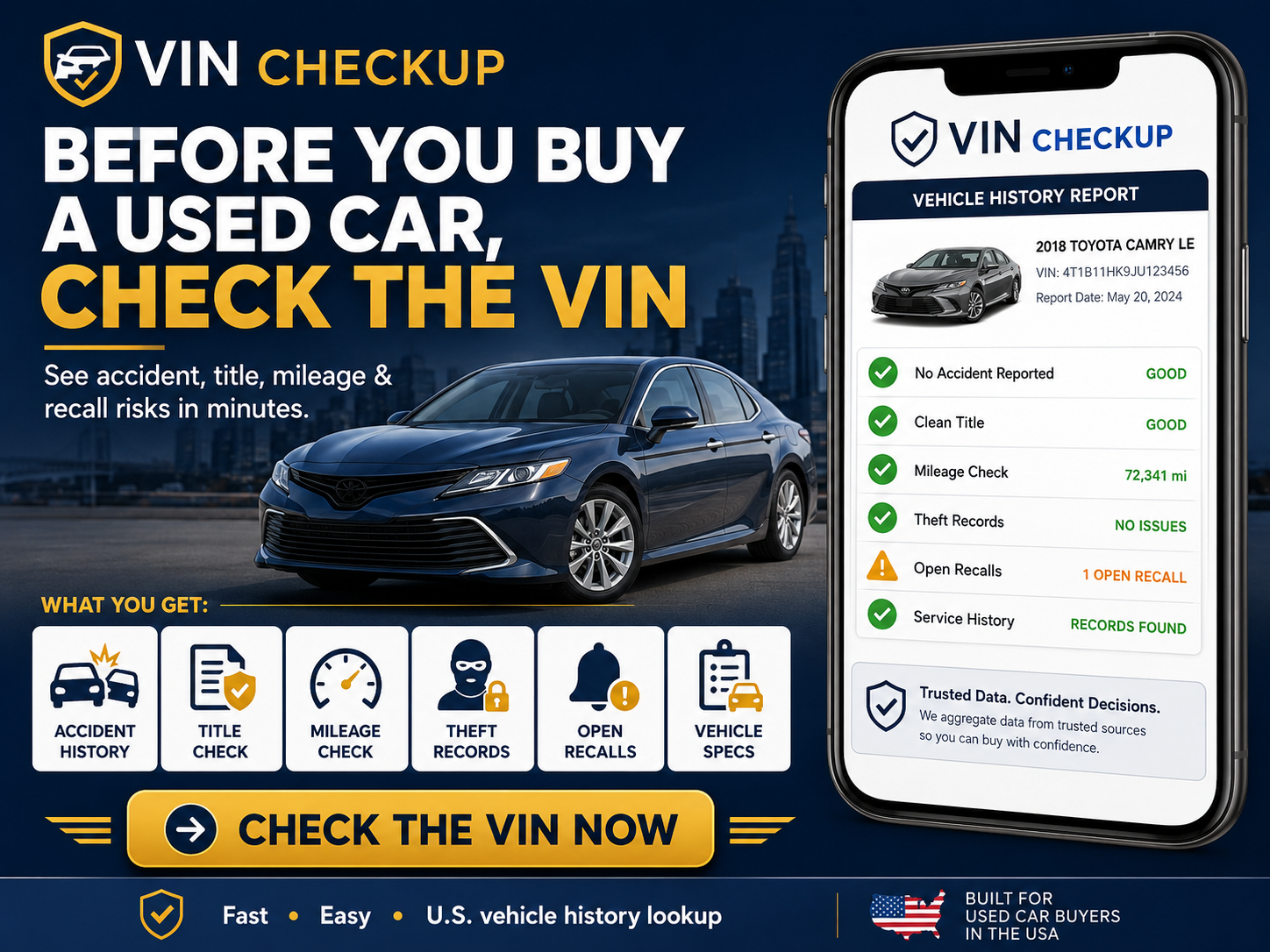
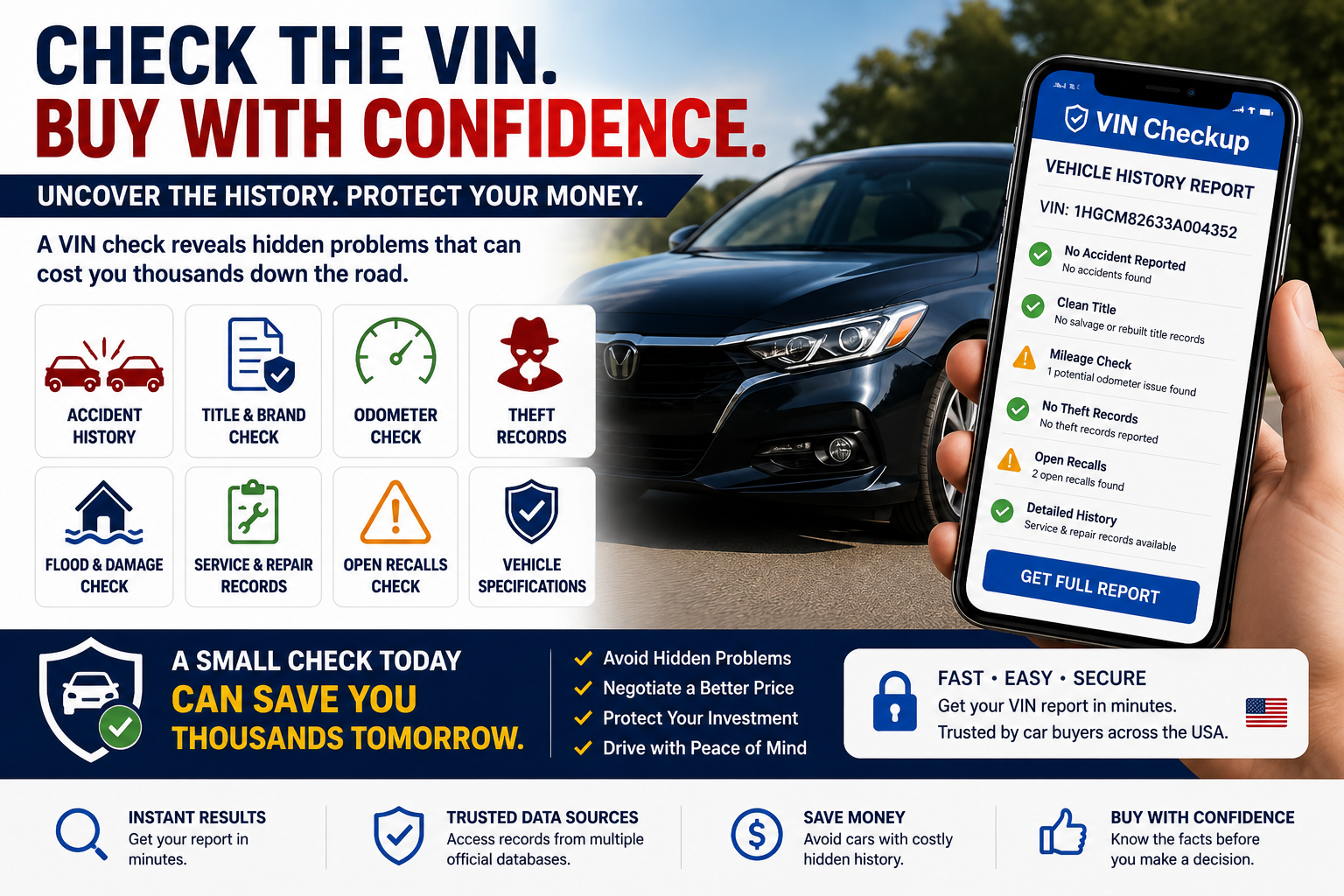
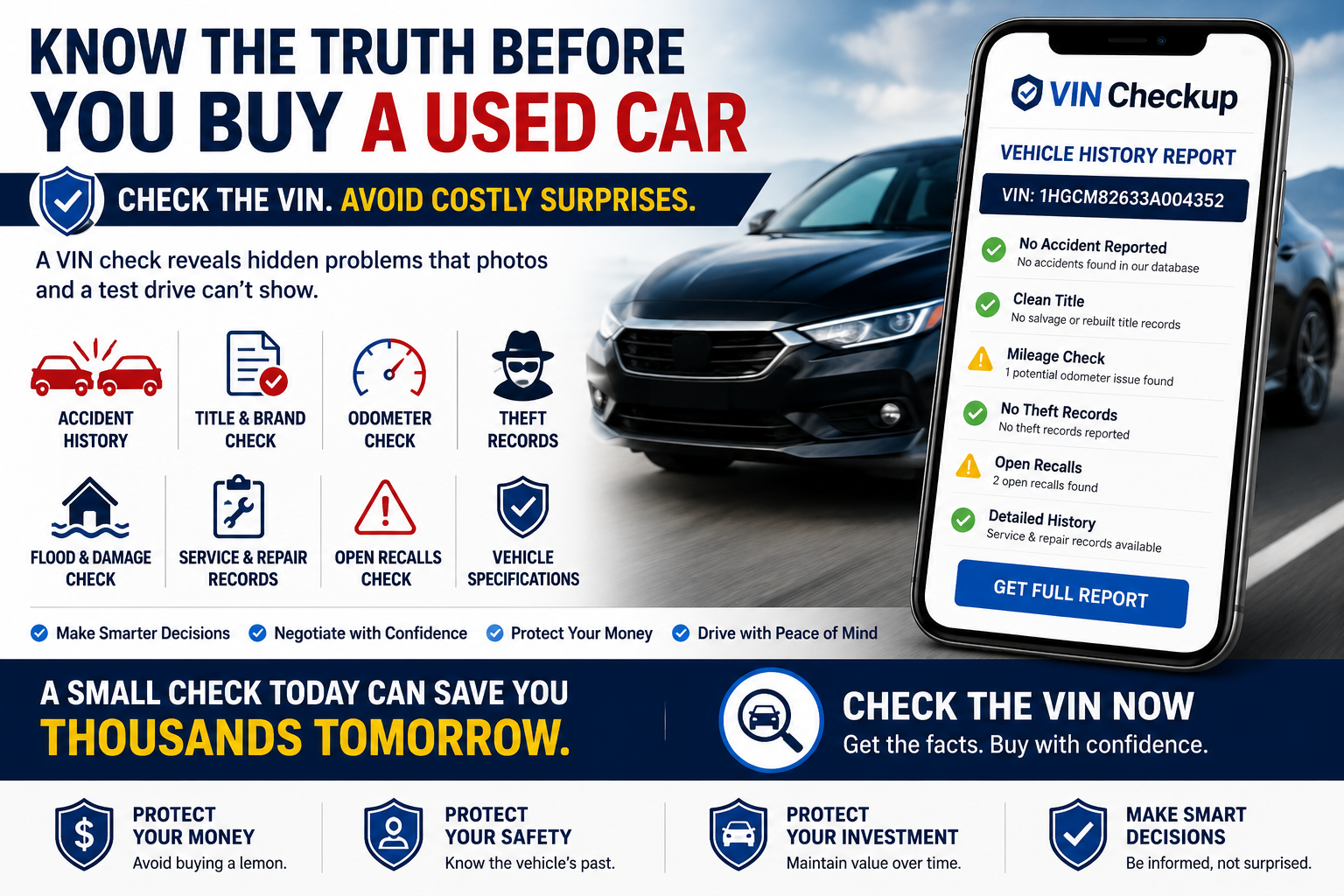
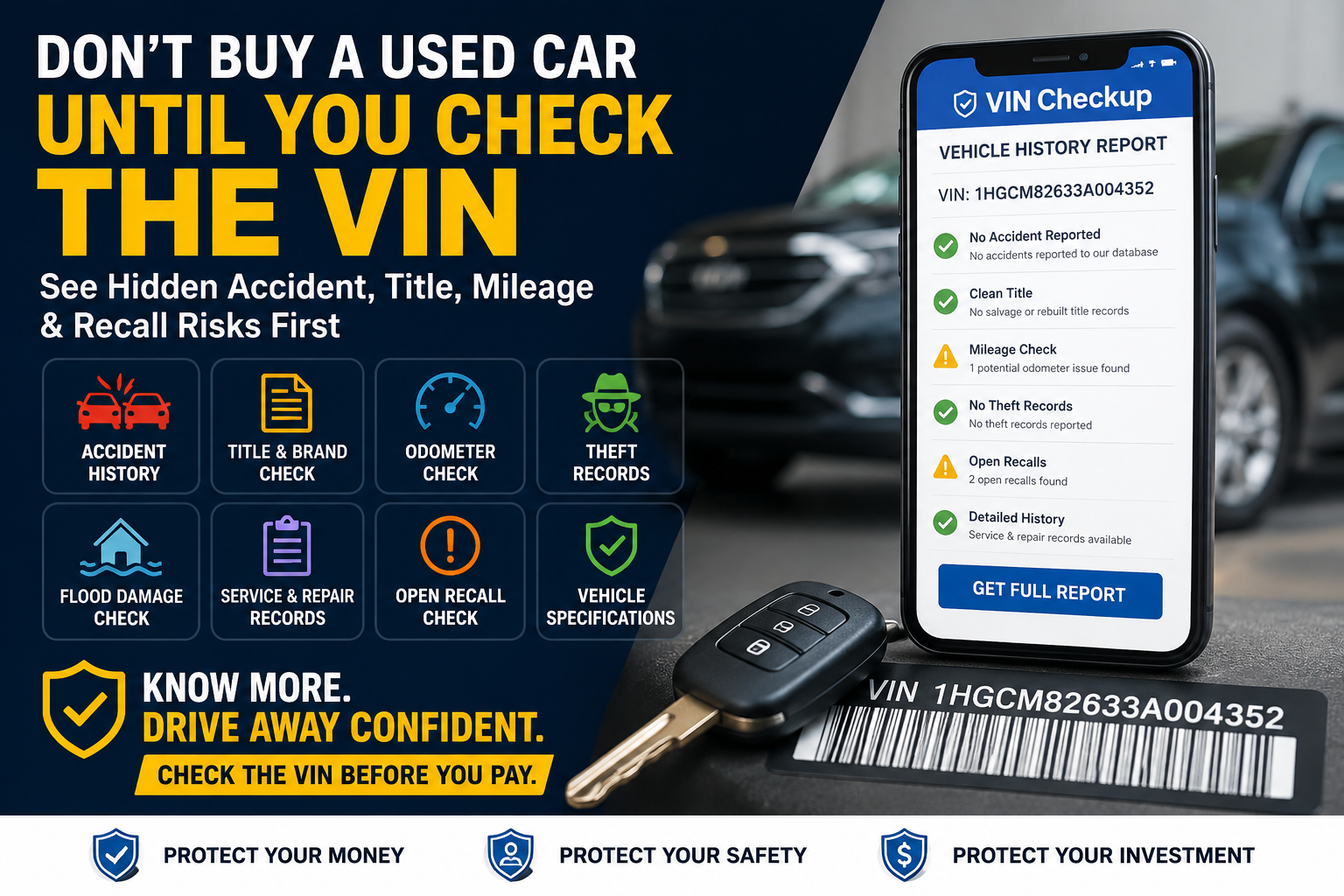
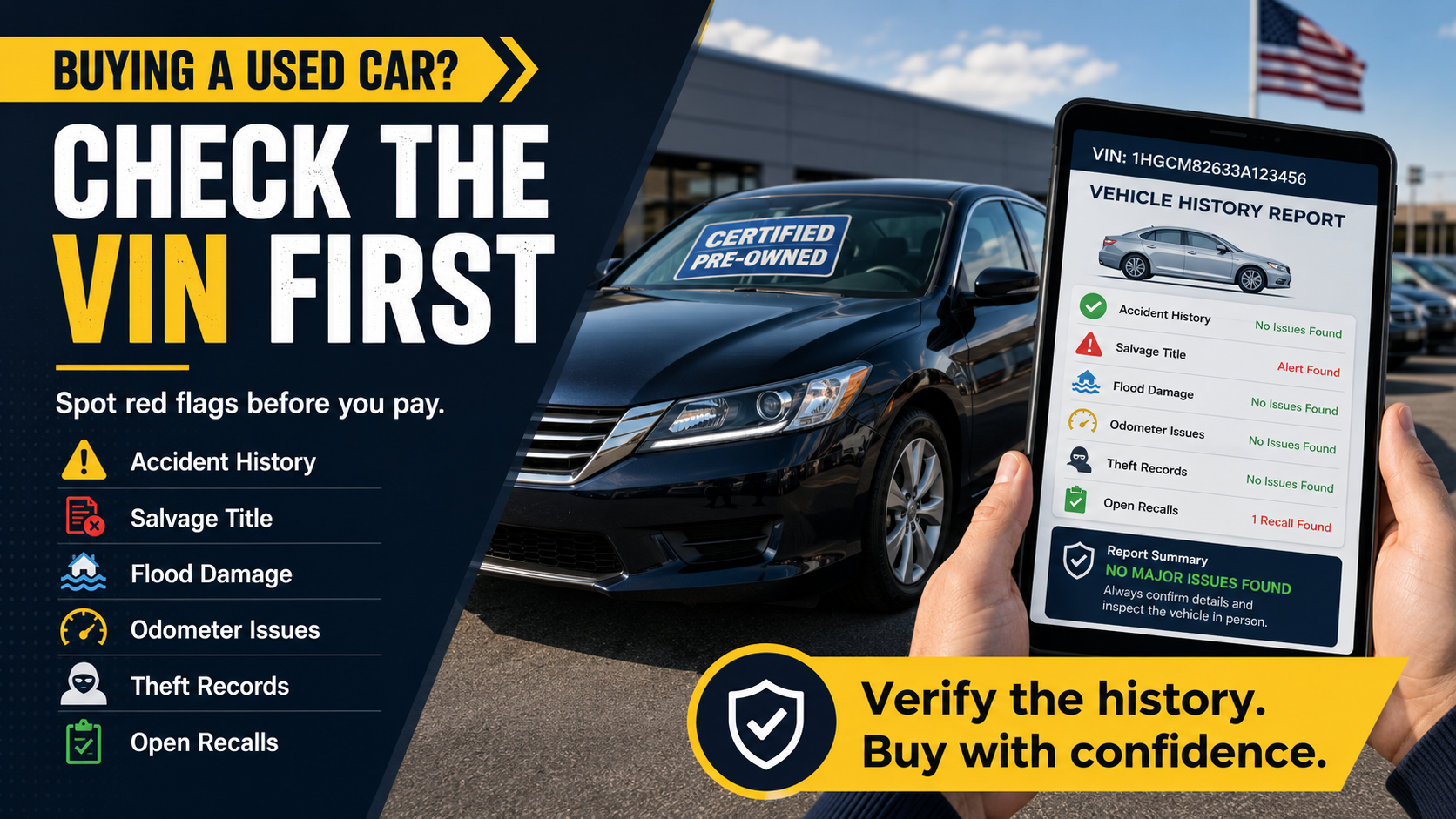
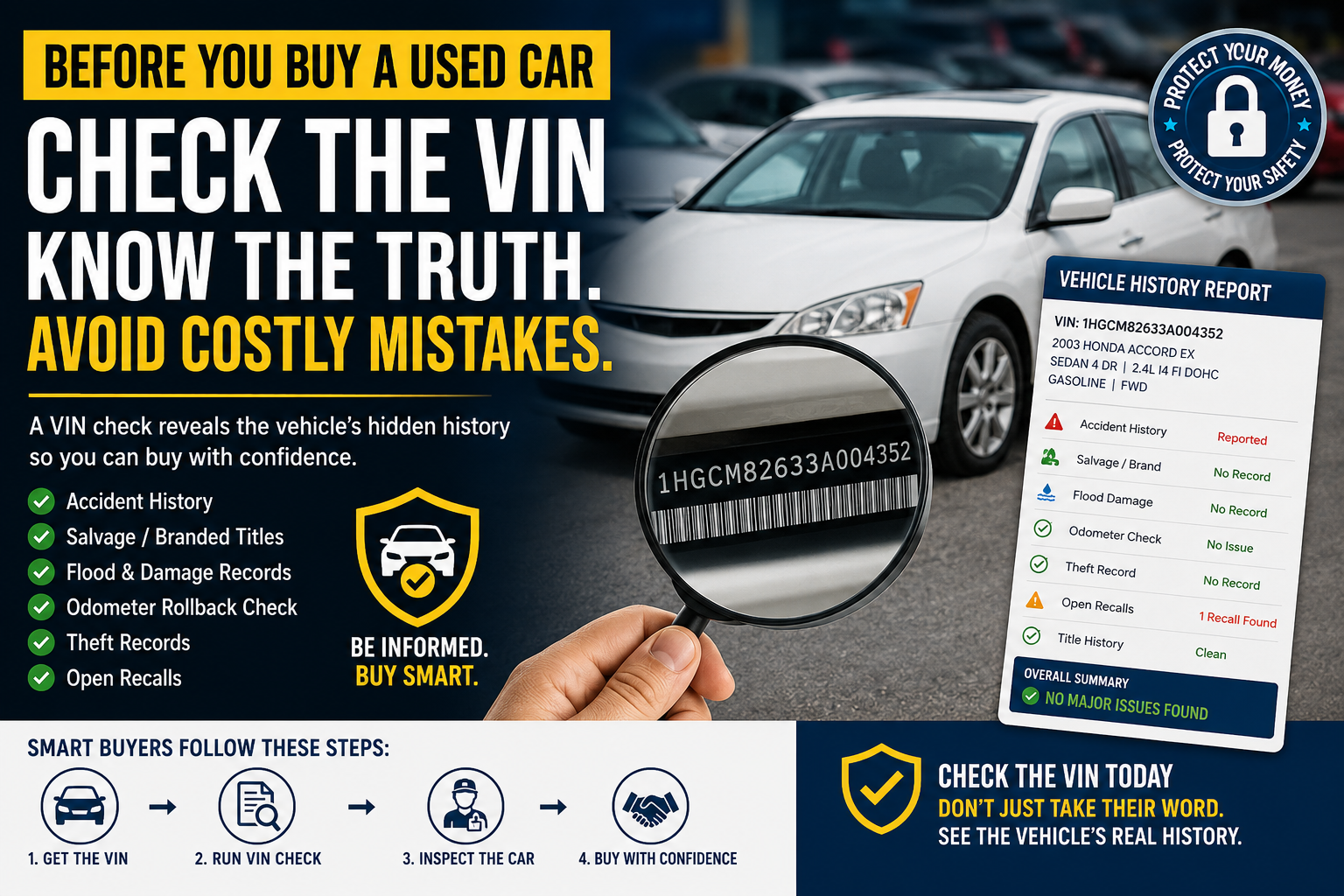
Buying a used vehicle can be one of the best financial decisions you make, but only if you know what you are really buying. A used car, truck, van, motorcycle, or RV may look clean in photos, drive well during a short test drive, and still have serious hidden problems in its history. That is why checking the Vehicle Identification Number, also known as the VIN, is an important step before making a final decision.
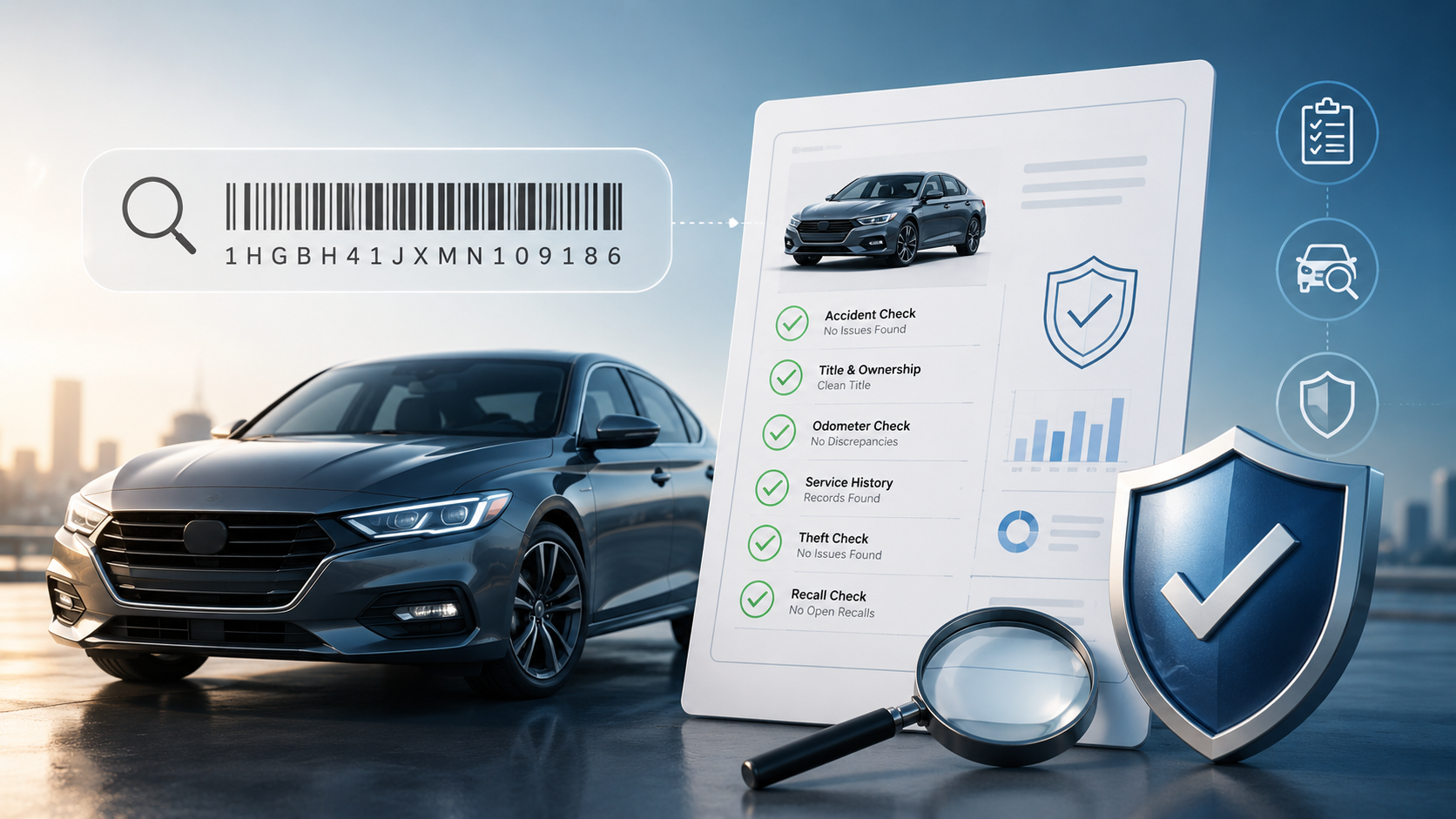
VIN CheckUp helps buyers access important vehicle history information before they commit their money. Instead of relying only on what the seller says, a VIN CheckUp report gives you a clearer look at the vehicle’s background so you can ask better questions, compare the seller’s claims with available records, and avoid surprises that could cost you thousands of dollars later.
A VIN is like a vehicle’s fingerprint. Every vehicle has its own unique identification number, and that number can be used to search for records connected to that specific car. These records may include accident history, title information, salvage or rebuilt status, odometer readings, previous ownership records, possible lien information, and other important details that may not be obvious during a quick inspection.
This matters because many used vehicle problems are not immediately visible. A vehicle could have been in a major accident and repaired to look normal. It could have a branded title that affects its value, financing options, insurance eligibility, or resale potential. It could have mileage inconsistencies that suggest the odometer may not reflect the real use of the vehicle. It could also have a history that makes it harder to sell later, even if it seems like a good deal today.
Before buying any used vehicle, one of the first questions you should ask is: “Does the vehicle’s history match what the seller is telling me?” If the seller says the car has never been in an accident, a vehicle history report can help you look for reported accident records. If the seller says the mileage is accurate, the report may help you compare mileage readings over time. If the seller says the title is clean, the report may help you check for title brands such as salvage, rebuilt, flood, or other serious designations.
Another important question is: “Why is this vehicle priced lower than similar vehicles?” Sometimes a lower price is simply a good deal. Other times, it may reflect hidden issues such as previous damage, title problems, high mileage, inconsistent records, or past use as a rental, fleet, commercial, or heavily driven vehicle. A VIN CheckUp report can help you understand whether the asking price makes sense based on the vehicle’s background.
A third question every buyer should ask is: “Could this vehicle cost me more after I buy it?” The purchase price is only one part of the decision. A vehicle with past accident damage, title issues, poor maintenance history, or mileage concerns may lead to expensive repairs, safety concerns, insurance complications, or lower resale value. Spending a modest amount before buying can help you avoid a much larger financial mistake.
VIN CheckUp is especially useful when shopping through online listings, private sellers, small dealerships, auctions, or marketplace-style websites. Online listings often show the best photos and highlight the most attractive features, but they do not always tell the full story. A clean exterior, polished interior, and friendly seller do not guarantee that the vehicle has a clean history. Before meeting the seller or negotiating the final price, checking the VIN can help you decide whether the vehicle is worth your time.
For private-party purchases, a vehicle history report can be even more important. Unlike large dealerships, private sellers may not provide detailed records upfront. Some sellers may not know the full history of the vehicle themselves, especially if they bought it used. Others may avoid mentioning issues that could lower the price. A VIN CheckUp report gives you an independent starting point so you are not depending only on the seller’s explanation.
A VIN CheckUp report can also help you negotiate. If the report shows an accident, previous title issue, multiple owners, mileage inconsistency, or other concern, you can use that information to ask direct questions. You may decide to negotiate a lower price, request repair documents, ask for a mechanic’s inspection, or walk away completely. In many cases, the value of the report is not only in what it tells you, but in the confidence it gives you to make a better decision.
Here are some important questions to ask after reviewing a VIN CheckUp report:
Has the vehicle ever been reported in an accident?
Does the title appear clean, or are there signs of salvage, rebuilt, flood, or other branded title history?
Do the mileage records look consistent over time?
How many owners has the vehicle had?
Was the vehicle used for personal, rental, fleet, commercial, or other high-use purposes?
Are there any records that do not match the seller’s claims?
Does the report suggest anything that should be inspected by a mechanic before purchase?
Would the vehicle’s history affect its resale value later?
Would your insurance company have any concerns with the title or history?
Is the current price fair based on the vehicle’s background?
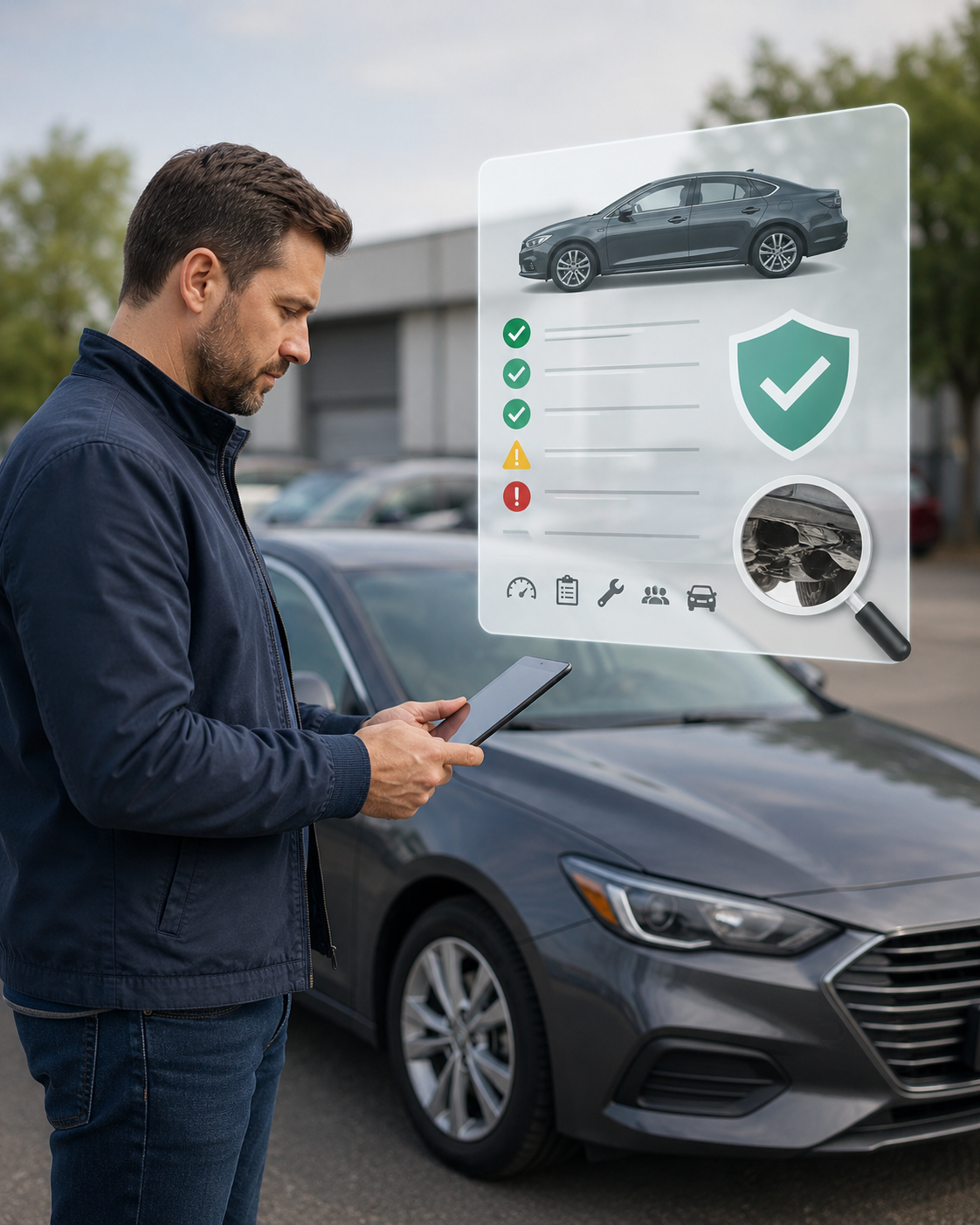
It is also important to understand that a vehicle history report should not replace a physical inspection. A report is a powerful tool, but it should be used together with a test drive, visual inspection, review of maintenance records, and ideally an inspection by a trusted mechanic. A clean report does not guarantee a perfect vehicle, and a report with issues does not always mean the vehicle is a bad purchase. The goal is to give you more information so you can make a decision based on facts instead of guesswork.
For example, if a report shows minor damage from years ago and the vehicle was properly repaired, you may still consider buying it if the price is right and a mechanic confirms it is in good condition. However, if the report shows severe damage, title branding, mileage problems, or inconsistent records, that may be a sign to slow down, ask more questions, or keep shopping.
The same applies to rebuilt or salvage vehicles. Some buyers are attracted to these vehicles because they are often cheaper, but they can carry additional risk. Insurance may be more difficult or expensive. Financing may be limited. Resale value may be lower. Repairs may not always have been completed to the standard you expect. A VIN CheckUp report can help you identify these issues before you make a decision you may regret.
Odometer readings are another key area to review carefully. Mileage affects value, maintenance needs, and long-term reliability. If the report shows mileage records that do not follow a logical pattern, that is a red flag. Even if the car looks good, mileage inconsistencies should be taken seriously because they may affect both the real condition of the vehicle and the fairness of the price.
VIN CheckUp can also save you time. Instead of visiting multiple vehicles blindly, you can check the VIN first and eliminate options that show major concerns. This is especially helpful if you are shopping from a distance or comparing several vehicles online. A report can help you focus on the vehicles that are more likely to be worth seeing in person.
At $19.95, VIN CheckUp is a small investment compared with the potential cost of buying the wrong vehicle. One hidden issue can lead to expensive repairs, lower resale value, failed negotiations, insurance problems, or safety concerns. When you are preparing to spend thousands of dollars on a used vehicle, getting more information before you buy is a practical and responsible step.
VIN CheckUp is designed for buyers who want confidence, clarity, and control during the used vehicle buying process. Whether you are buying your first car, upgrading your family vehicle, purchasing a work truck, looking at a motorcycle, or considering an RV, checking the VIN can help you understand the vehicle’s past before it becomes part of your future.
Do not let a clean photo, a low price, or a convincing seller be the only reason you move forward. Use VIN CheckUp to review the vehicle’s history, identify possible red flags, ask smarter questions, and make a more informed decision.
Before you buy, check the VIN. Before you negotiate, know the history. Before you hand over your money, protect yourself with VIN CheckUp.
Buying a used vehicle can be one of the best financial decisions you make, but only if you know what you are really buying. A used car, truck, van, motorcycle, or RV may look clean in photos, drive well during a short test drive, and still have serious hidden problems in its history. That is why checking the Vehicle Identification Number, also known as the VIN, is an important step before making a final decision.
VIN CheckUp helps buyers access important vehicle history information before they commit their money. Instead of relying only on what the seller says, a VIN CheckUp report gives you a clearer look at the vehicle’s background so you can ask better questions, compare the seller’s claims with available records, and avoid surprises that could cost you thousands of dollars later.
A VIN is like a vehicle’s fingerprint. Every vehicle has its own unique identification number, and that number can be used to search for records connected to that specific car. These records may include accident history, title information, salvage or rebuilt status, odometer readings, previous ownership records, possible lien information, and other important details that may not be obvious during a quick inspection.
This matters because many used vehicle problems are not immediately visible. A vehicle could have been in a major accident and repaired to look normal. It could have a branded title that affects its value, financing options, insurance eligibility, or resale potential. It could have mileage inconsistencies that suggest the odometer may not reflect the real use of the vehicle. It could also have a history that makes it harder to sell later, even if it seems like a good deal today.
Before buying any used vehicle, one of the first questions you should ask is: “Does the vehicle’s history match what the seller is telling me?” If the seller says the car has never been in an accident, a vehicle history report can help you look for reported accident records. If the seller says the mileage is accurate, the report may help you compare mileage readings over time. If the seller says the title is clean, the report may help you check for title brands such as salvage, rebuilt, flood, or other serious designations.
Another important question is: “Why is this vehicle priced lower than similar vehicles?” Sometimes a lower price is simply a good deal. Other times, it may reflect hidden issues such as previous damage, title problems, high mileage, inconsistent records, or past use as a rental, fleet, commercial, or heavily driven vehicle. A VIN CheckUp report can help you understand whether the asking price makes sense based on the vehicle’s background.
A third question every buyer should ask is: “Could this vehicle cost me more after I buy it?” The purchase price is only one part of the decision. A vehicle with past accident damage, title issues, poor maintenance history, or mileage concerns may lead to expensive repairs, safety concerns, insurance complications, or lower resale value. Spending a modest amount before buying can help you avoid a much larger financial mistake.
VIN CheckUp is especially useful when shopping through online listings, private sellers, small dealerships, auctions, or marketplace-style websites. Online listings often show the best photos and highlight the most attractive features, but they do not always tell the full story. A clean exterior, polished interior, and friendly seller do not guarantee that the vehicle has a clean history. Before meeting the seller or negotiating the final price, checking the VIN can help you decide whether the vehicle is worth your time.
For private-party purchases, a vehicle history report can be even more important. Unlike large dealerships, private sellers may not provide detailed records upfront. Some sellers may not know the full history of the vehicle themselves, especially if they bought it used. Others may avoid mentioning issues that could lower the price. A VIN CheckUp report gives you an independent starting point so you are not depending only on the seller’s explanation.
A VIN CheckUp report can also help you negotiate. If the report shows an accident, previous title issue, multiple owners, mileage inconsistency, or other concern, you can use that information to ask direct questions. You may decide to negotiate a lower price, request repair documents, ask for a mechanic’s inspection, or walk away completely. In many cases, the value of the report is not only in what it tells you, but in the confidence it gives you to make a better decision.
Here are some important questions to ask after reviewing a VIN CheckUp report:
Has the vehicle ever been reported in an accident?
Does the title appear clean, or are there signs of salvage, rebuilt, flood, or other branded title history?
Do the mileage records look consistent over time?
How many owners has the vehicle had?
Was the vehicle used for personal, rental, fleet, commercial, or other high-use purposes?
Are there any records that do not match the seller’s claims?
Does the report suggest anything that should be inspected by a mechanic before purchase?
Would the vehicle’s history affect its resale value later?
Would your insurance company have any concerns with the title or history?
Is the current price fair based on the vehicle’s background?
It is also important to understand that a vehicle history report should not replace a physical inspection. A report is a powerful tool, but it should be used together with a test drive, visual inspection, review of maintenance records, and ideally an inspection by a trusted mechanic. A clean report does not guarantee a perfect vehicle, and a report with issues does not always mean the vehicle is a bad purchase. The goal is to give you more information so you can make a decision based on facts instead of guesswork.
For example, if a report shows minor damage from years ago and the vehicle was properly repaired, you may still consider buying it if the price is right and a mechanic confirms it is in good condition. However, if the report shows severe damage, title branding, mileage problems, or inconsistent records, that may be a sign to slow down, ask more questions, or keep shopping.
The same applies to rebuilt or salvage vehicles. Some buyers are attracted to these vehicles because they are often cheaper, but they can carry additional risk. Insurance may be more difficult or expensive. Financing may be limited. Resale value may be lower. Repairs may not always have been completed to the standard you expect. A VIN CheckUp report can help you identify these issues before you make a decision you may regret.
Odometer readings are another key area to review carefully. Mileage affects value, maintenance needs, and long-term reliability. If the report shows mileage records that do not follow a logical pattern, that is a red flag. Even if the car looks good, mileage inconsistencies should be taken seriously because they may affect both the real condition of the vehicle and the fairness of the price.
VIN CheckUp can also save you time. Instead of visiting multiple vehicles blindly, you can check the VIN first and eliminate options that show major concerns. This is especially helpful if you are shopping from a distance or comparing several vehicles online. A report can help you focus on the vehicles that are more likely to be worth seeing in person.
At $19.95, VIN CheckUp is a small investment compared with the potential cost of buying the wrong vehicle. One hidden issue can lead to expensive repairs, lower resale value, failed negotiations, insurance problems, or safety concerns. When you are preparing to spend thousands of dollars on a used vehicle, getting more information before you buy is a practical and responsible step.
VIN CheckUp is designed for buyers who want confidence, clarity, and control during the used vehicle buying process. Whether you are buying your first car, upgrading your family vehicle, purchasing a work truck, looking at a motorcycle, or considering an RV, checking the VIN can help you understand the vehicle’s past before it becomes part of your future.
Do not let a clean photo, a low price, or a convincing seller be the only reason you move forward. Use VIN CheckUp to review the vehicle’s history, identify possible red flags, ask smarter questions, and make a more informed decision.
Before you buy, check the VIN. Before you negotiate, know the history. Before you hand over your money, protect yourself with VIN CheckUp.
Compare before you decide
- Final price and what the deal includes.
- Validity, terms, and extra costs.
- Delivery method, support, or booking details.
Unlock the Truth: VIN CheckUp Vehicle History Reports for Smart Used Car Buyers
8 photos
E-Commerce & Software
Check validity
Buyer tip: Confirm the final price, what the offer includes, validity, and delivery terms before paying.
Choose the most useful action
Open the deal if you are ready
Use it when you already verified enough and just want to go directly to claim the deal.
Form for full terms
Better if you need to ask about restrictions, support, reservation, delivery, or extra costs.
Contact us about this offer
Ask about availability, terms, dates, support, and any extra costs.
Is it still valid?What is included exactly?Are there extra costs?How is it delivered or reserved?
Contact the seller
Ask about availability, price, delivery, or purchase details.