
Is Your Dog Ignoring You? Try Brain Training Games That Teach Better Behavior at Home
Many dog owners struggle with barking, jumping, chewing, pulling on the leash, or a dog that simply does not listen. Brain Training for Dogs is an online course designed to help owners improve obedience, focus, and behavior through fun at-home training games and positive methods.
Disclosure: NegocieloHoy may earn a commission if you buy or sign up through links on this page. This does not change the price you pay.
Is Your Dog Ignoring You? Brain Training May Help Improve Behavior at Home
Many dog owners love their pets deeply, but daily behavior problems can become frustrating. A dog may bark too much, jump on visitors, chew shoes or furniture, pull on the leash, ignore commands, dig in the yard, or act restless inside the house. These problems are common, but they can make life stressful when the owner does not know what to do next.
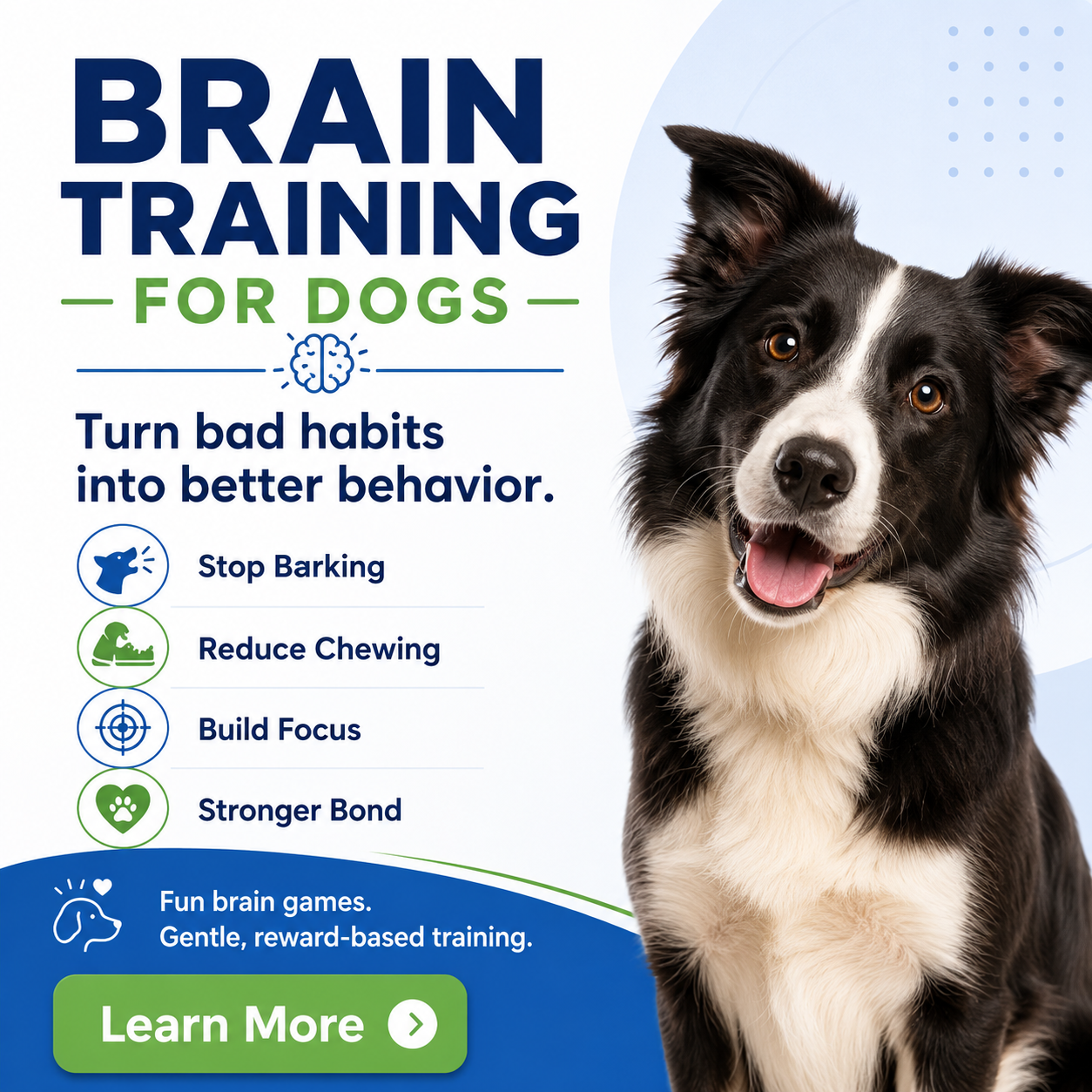
Brain Training for Dogs is an online dog training course designed to help owners train their dogs at home using mental exercises, obedience lessons, and positive training techniques. Instead of only reacting when a dog does something wrong, the course focuses on helping dogs learn better habits through structured activities and brain games.
For many owners, the issue is not that the dog is “bad.” Often, the dog is bored, confused, under-stimulated, or has not been taught clearly what behavior is expected. Dogs need more than food, walks, and affection. They also need mental stimulation, consistency, patience, and clear communication.
Why Dog Behavior Problems Happen
Dogs do not automatically understand human rules. A puppy does not know that shoes are not toys. An energetic dog does not know that jumping on guests is unwanted. A barking dog may be reacting to excitement, fear, boredom, attention-seeking, or lack of training.
Common behavior problems include:
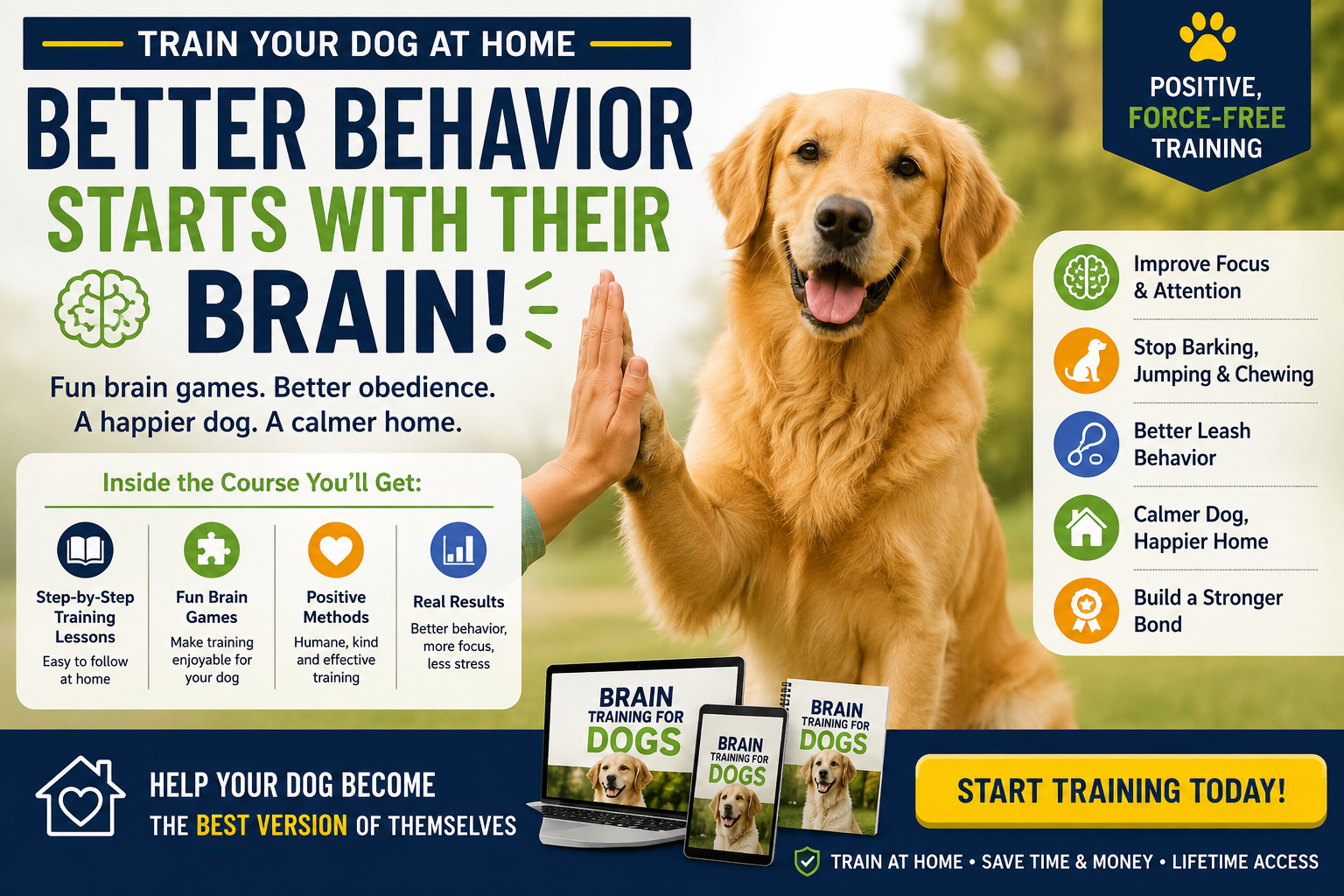
- Excessive barking
- Jumping on people
- Chewing furniture, shoes, or household items
- Pulling on the leash
- Ignoring commands
- Poor recall when called
- Digging
- Restlessness or boredom
- Lack of impulse control
- Difficulty focusing during training
These issues can become worse when owners only correct the dog after the problem happens. The dog barks, so the owner yells. The dog jumps, so the owner pushes it away. The dog chews something, so the owner gets angry. But punishment or frustration does not always teach the dog what to do instead.
A better approach is to teach the dog the behavior you want before problems happen. That means practicing attention, focus, calmness, patience, recall, and obedience in a structured way.
What Is Brain Training for Dogs?
Brain Training for Dogs is a digital dog training program that uses games and lessons to help improve obedience and behavior. The idea is simple: when dogs use their minds, they often become more focused, more confident, and easier to guide.
Training games can help dogs learn how to pay attention, solve simple problems, respond to commands, and work with their owner. This can make training feel less like a battle and more like a fun activity both the owner and the dog can enjoy.
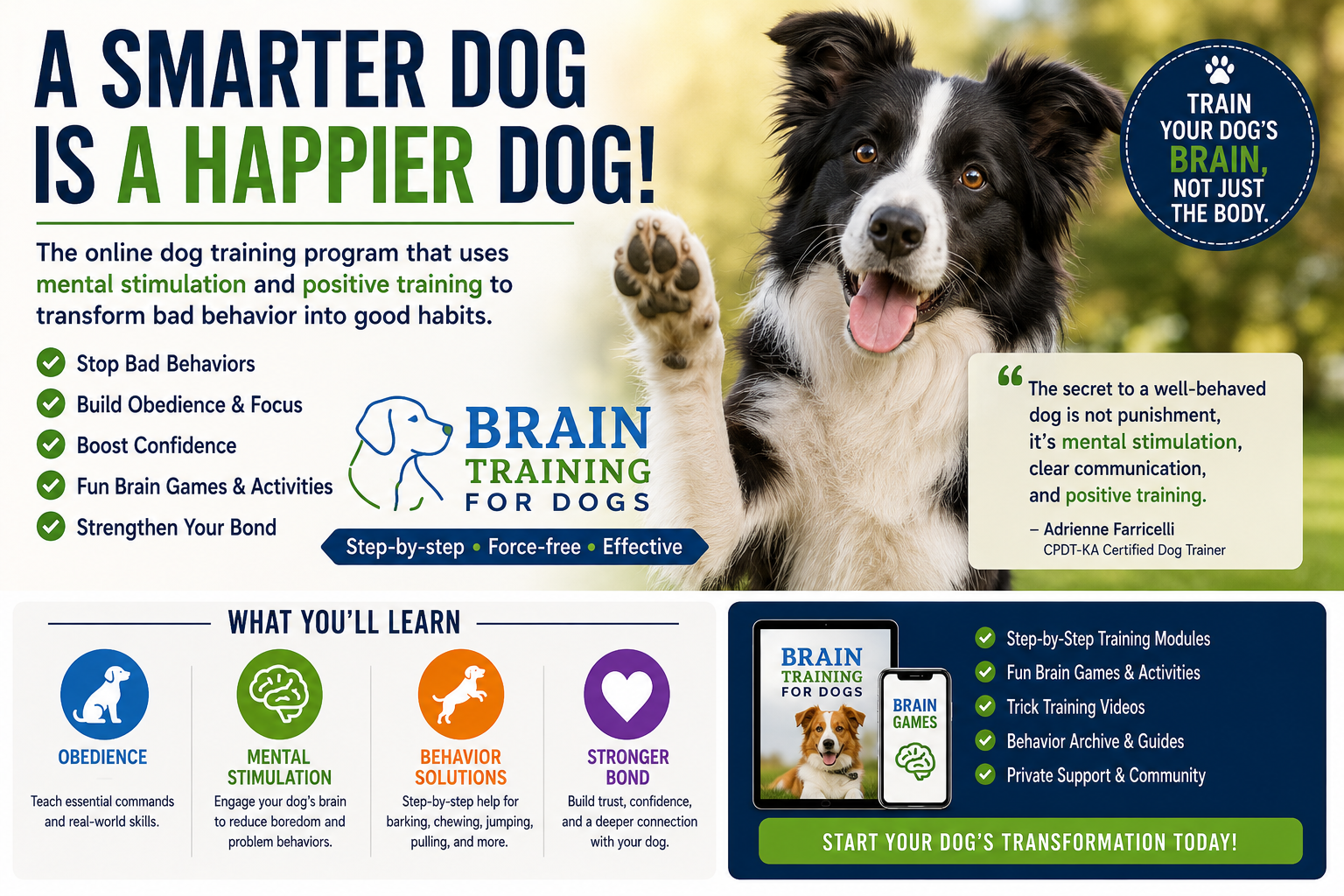
This type of course is useful for owners who want a structured training plan instead of watching random videos online. Many people try to train their dog by searching for different tips, but the advice can feel scattered. One video says one thing, another video says something different, and the owner does not know what to practice first.
A step-by-step dog training course can help create more consistency. And consistency is one of the most important parts of training any dog.
Who Is This Course For?
Brain Training for Dogs may be useful for:
- New dog owners
- Puppy owners
- Owners of energetic dogs
- People struggling with barking, jumping, or chewing
- Families training a dog at home
- Owners who want positive dog training methods
- Dog lovers who want better obedience and communication
- People who want a structured course instead of random online tips
It can be especially helpful for owners who want to start training from home before paying for expensive in-person sessions. However, if a dog shows serious aggression, extreme fear, severe anxiety, or dangerous behavior, the owner should speak with a qualified professional trainer or veterinarian.
Why Mental Stimulation Matters
Many dog owners focus only on physical exercise. Walks, running, and playtime are important, but mental stimulation is also essential. A dog can be physically active and still mentally bored.
A bored dog may create its own entertainment by barking, digging, chewing, jumping, or getting into things around the house. Brain games give the dog something productive to do. They help the dog focus, think, and work for rewards.
A mentally engaged dog is often calmer and easier to manage. Training activities can also strengthen the bond between the dog and the owner because the dog learns to pay attention and respond.
Can Brain Training Help With Barking?
Barking is one of the most common reasons owners look for dog training help. Dogs bark for many reasons: excitement, fear, boredom, protection, frustration, or attention. Because barking can have different causes, it is important to understand the dog’s behavior before trying to correct it.
Start dog training at home today
Brain training can help by teaching focus, impulse control, and better communication. When a dog learns to pay attention to the owner, it becomes easier to redirect behavior before barking becomes excessive.
This does not mean every barking problem disappears instantly. Training takes repetition. But a structured course can help owners understand how to work with the dog instead of only reacting after the barking starts.
Can It Help With Jumping, Chewing, and Leash Pulling?
Jumping, chewing, and leash pulling are also common training challenges. Dogs often jump because they are excited and want attention. They chew because they are bored, teething, anxious, or exploring. They pull on the leash because they want to move faster, smell everything, or have never learned loose-leash walking.
Training games and obedience exercises can help build self-control. A dog that learns to focus, wait, respond, and follow simple commands may become easier to guide in daily situations.
The goal is not only to stop unwanted behavior. The goal is to teach replacement behavior. Instead of jumping, the dog can learn to sit. Instead of chewing shoes, the dog can learn appropriate activities. Instead of pulling, the dog can learn to walk with more attention.
What Makes a Good Dog Training Course?
Before choosing any dog training course, look for a program that is practical, clear, and realistic. A good course should help owners understand how dogs learn, how to reward good behavior, and how to practice consistently.
Look for training that focuses on:
- Clear step-by-step lessons
- Positive methods
- Simple exercises owners can do at home
- Common behavior problems
- Obedience and communication
- Consistency and repetition
- Realistic expectations
No course can magically fix every dog overnight. Good training requires patience. Owners need to practice regularly and stay consistent even when progress feels slow.
Important Reminder: Training Takes Consistency
One of the biggest mistakes dog owners make is expecting immediate results. Dogs learn through repetition and reinforcement. A course can provide the plan, but the owner must apply it.
Training works best when sessions are short, consistent, and positive. It is better to practice a few minutes every day than to train once in a while for a long time. Dogs also respond better when the owner is calm, patient, and clear.
If your dog does not understand something immediately, that does not mean the dog is stubborn. It may mean the lesson needs to be broken down into smaller steps.
Why This Offer Fits Dog Owners in the USA
Many dog owners in the USA are busy. Between work, school, family, and daily responsibilities, it can be hard to schedule in-person dog training. Online training gives owners a flexible way to start learning from home.
This can be useful for families with puppies, people adopting rescue dogs, owners of energetic breeds, or anyone who wants to improve behavior without guessing what to do next.
Brain Training for Dogs is not just about commands. It is about creating better communication between the owner and the dog. Better communication can lead to a calmer home, safer walks, and a stronger bond.
Final Thoughts
If your dog ignores you, barks too much, jumps on guests, pulls on the leash, chews household items, or seems bored and restless, a structured dog training course may be a smart first step.
Brain Training for Dogs gives owners a way to train from home using mental exercises, obedience lessons, and positive methods. It can help owners stop guessing and start following a plan.
A well-trained dog is not only easier to manage. A trained dog is safer, calmer, and more connected with the people around them. Training can reduce stress, improve communication, and make life at home more enjoyable.
If you want your dog to listen better, focus more, and build better behavior through fun at-home training games, Brain Training for Dogs is a practical course to explore.