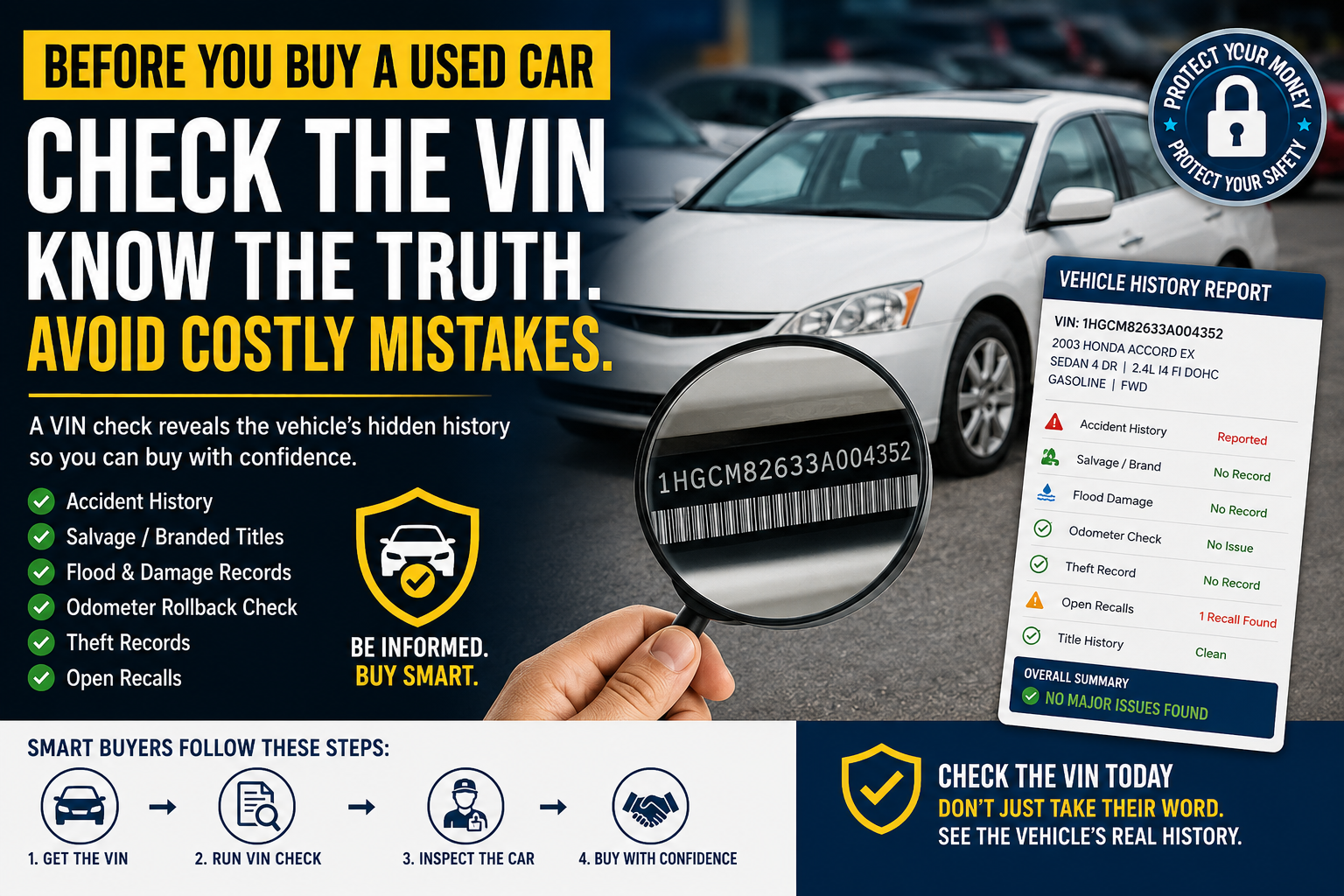
Before You Buy a Used Car in the USA, Check the VIN: Avoid Hidden Accidents, Salvage Titles, Flood Damage & Odometer Problems
Buying a used car in the USA? Before you pay, run a VIN check to look for accident history, salvage titles, flood damage, odometer problems, theft records, recalls, and other warning signs that may not appear in photos or during a short test drive.
Disclosure: NegocieloHoy may earn a commission if you purchase or sign up through links on this page. This does not change the price you pay.
Before You Buy a Used Car in the USA, Check the VIN First
Buying a used car can be a smart financial decision, but it can also become an expensive mistake if you do not know the vehicle’s real history. A car can look clean in photos, sound good during a short test drive, and still have hidden problems that may affect its safety, value, financing, insurance, and future repair costs. That is why running a VIN check before buying a used car is one of the most important steps for buyers in the United States.
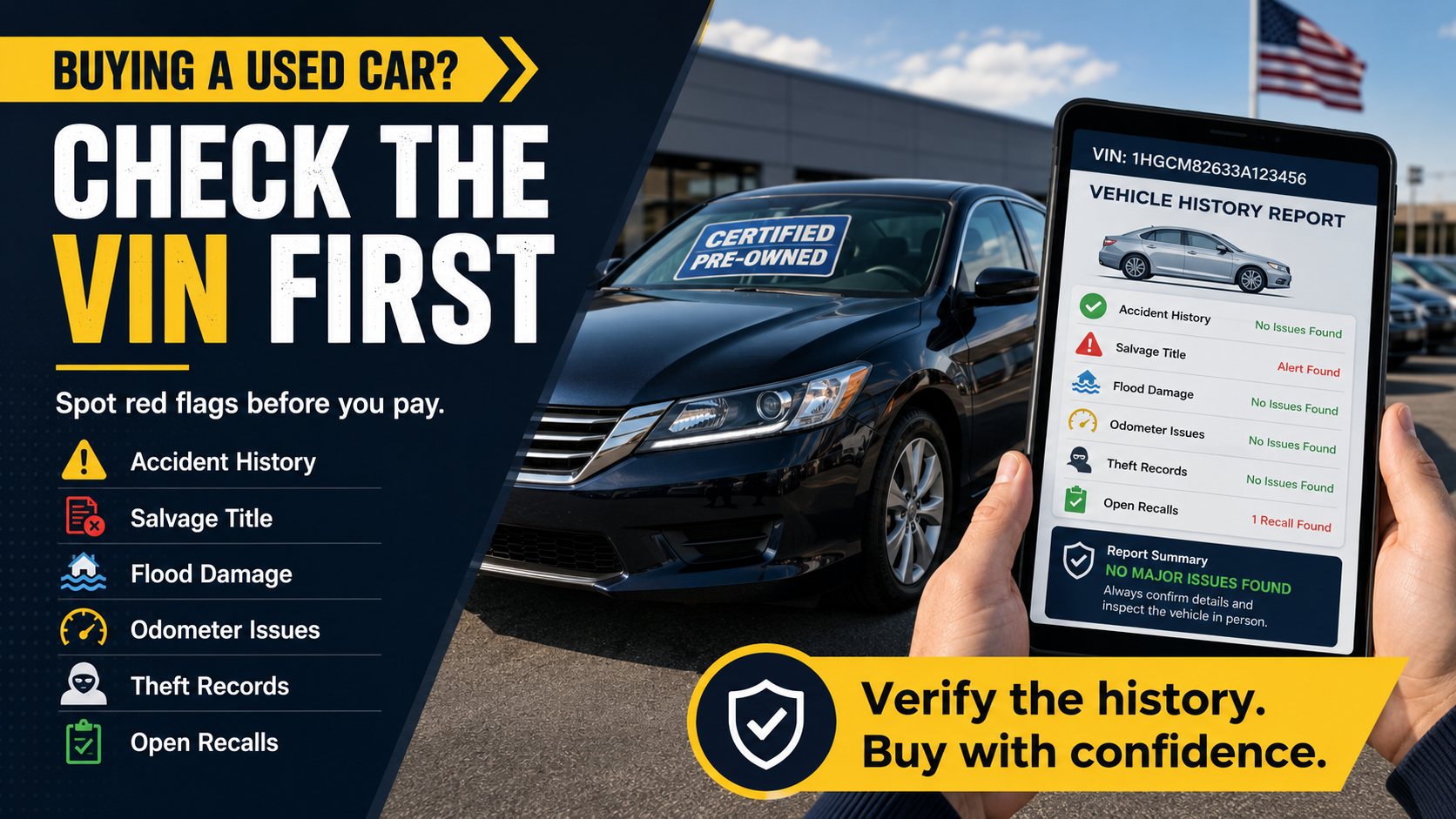
A VIN, or Vehicle Identification Number, is a unique 17-character code assigned to a vehicle. Think of it as the car’s fingerprint. It can help connect the vehicle to records related to title history, accidents, odometer readings, salvage or rebuilt status, theft records, flood damage, recalls, and other important information depending on the data available. When you are comparing used cars online, the VIN can help you move beyond the seller’s description and start checking the facts.
Many used-car buyers search for terms like VIN lookup, vehicle history report, used car VIN check, salvage title check, odometer rollback check, and accident history report because they want to avoid overpaying for a vehicle with hidden problems. This guide explains what a VIN check can show, what red flags to watch for, and how to use a vehicle history report as part of a smarter used-car buying process.
Why a VIN Check Matters When Buying a Used Car
Used-car listings are designed to make vehicles look attractive. Sellers usually highlight the best features: clean interior, low mileage, good tires, new paint, cold air conditioning, leather seats, backup camera, fuel economy, or a great price. Those details matter, but they do not tell the full story. A vehicle may have a branded title, past severe damage, inconsistent mileage records, or an insurance total-loss event that is not obvious in the listing.
A VIN check can help you identify warning signs before you spend money on travel, inspections, deposits, paperwork, or financing. It can also help you ask better questions. For example, if the report shows a previous salvage title, you can ask the seller what happened, who repaired the vehicle, whether receipts are available, and whether the vehicle passed state inspection after repairs. If the mileage looks inconsistent, you can ask for service records and compare the dashboard mileage with the report history.
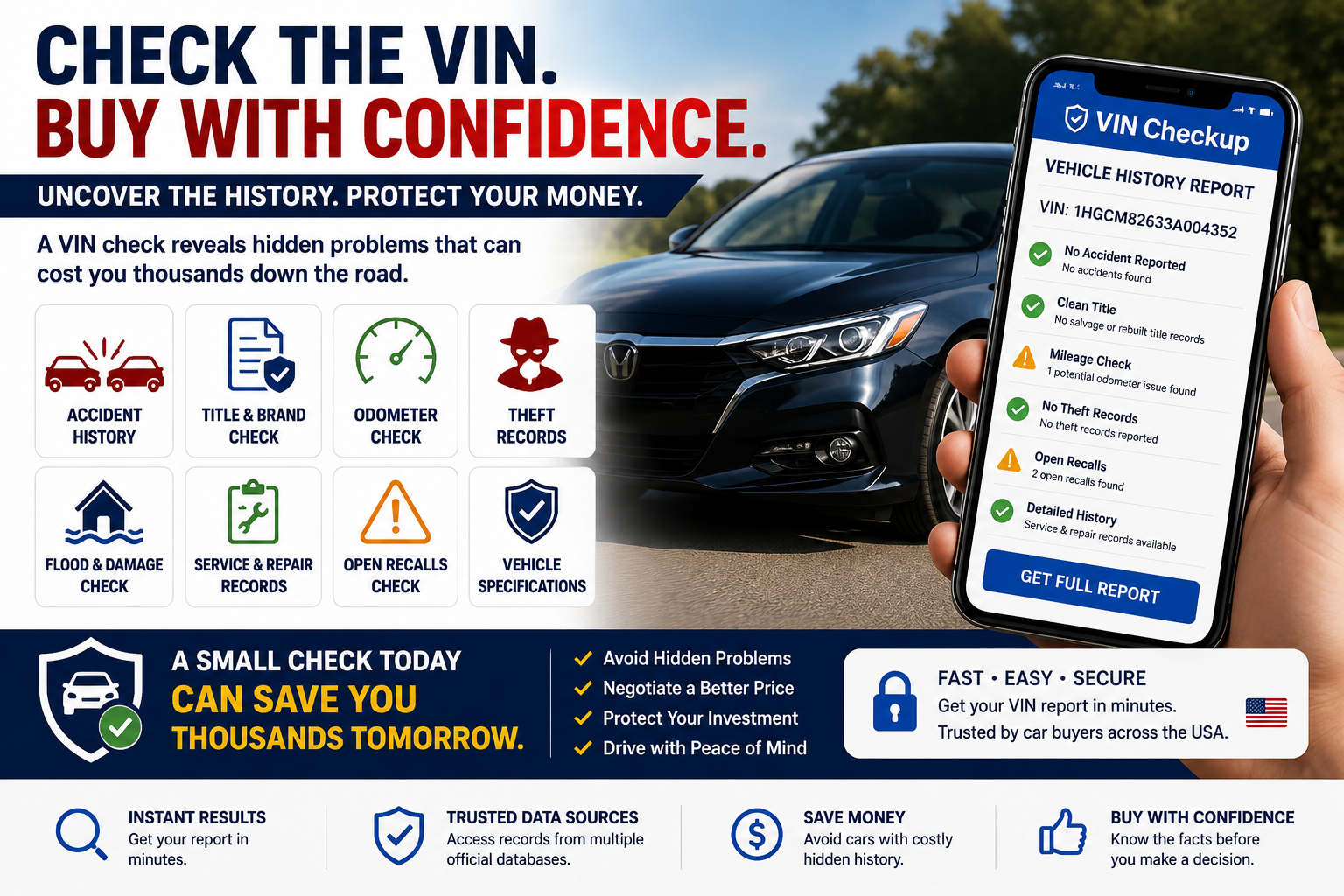
A VIN report does not guarantee that a car is perfect. It should not replace a professional mechanic inspection. However, it is a powerful first filter. It can help you decide whether a car is worth inspecting, whether the price makes sense, and whether you should walk away before wasting time or money.
Check the VIN before buying your next used car
What Can a Vehicle History Report Show?
A vehicle history report can include different types of information depending on the provider and available records. Not every report will show every possible issue, but buyers commonly use a VIN check to look for the following:
- Title history: Shows where the vehicle was titled and whether the title may have been branded.
- Salvage or rebuilt title: Indicates the vehicle may have been declared a total loss or repaired after major damage.
- Flood damage: Important for vehicles that may have been damaged by hurricanes, storms, or major flooding.
- Accident history: Helps identify reported damage events or insurance-related records.
- Odometer readings: Helps detect mileage inconsistencies or possible odometer rollback.
- Theft records: May show whether a vehicle was reported stolen or not recovered, depending on available data.
- Total loss records: May indicate that an insurance company considered the vehicle too expensive to repair.
- Recall information: Helps identify whether there are open safety recalls that need attention.
- Vehicle specifications: Confirms make, model, year, engine, body style, and other basic details.
The key point is simple: the VIN helps you verify what you are buying. If a seller says the car has a clean history but the report shows a branded title or inconsistent mileage, you now have a reason to pause and investigate further.
Red Flag #1: Salvage, Rebuilt, Junk, or Flood Title
One of the biggest reasons buyers run a salvage title check is to avoid paying clean-title prices for a vehicle with a serious history. A salvage title usually means the vehicle was damaged enough that an insurance company considered it a total loss. A rebuilt title may mean the vehicle was repaired and passed certain state requirements, but that does not automatically mean it is equal to a clean-title car.
A salvage or rebuilt vehicle can sometimes be legally driven, but buyers need to be careful. These vehicles may have lower resale value, more difficult financing, possible insurance limitations, and unknown repair quality. If structural damage, airbags, electrical systems, or safety components were involved, a poor repair can create long-term problems.
If a VIN check shows salvage, rebuilt, junk, flood, or total-loss history, do not ignore it. Ask for repair records, before-and-after photos, inspection documents, and a professional mechanic’s opinion. If the seller cannot explain the history clearly, consider walking away.
Red Flag #2: Flood Damage
Flood-damaged vehicles can be especially risky because the problems may not appear immediately. Water can damage wiring, sensors, computers, connectors, seat motors, dashboard electronics, carpets, insulation, engine components, and safety systems. A car may look clean after detailing, but corrosion and electrical issues can appear weeks or months later.
This is especially important in the USA after hurricanes, tropical storms, and major flooding events. Some damaged vehicles are moved across state lines and resold far from the original disaster area. A buyer in one state may not realize the vehicle was previously exposed to flood conditions in another state.
When reviewing a vehicle history report, look for flood brands, total-loss records, state title changes after major storms, and unusual ownership movement. Also inspect the car physically. Check for musty smells, water stains, rust under seats, mud in hidden areas, foggy lights, electrical issues, or mismatched interior parts. A VIN check helps, but a physical inspection is still essential.
Red Flag #3: Odometer Rollback or Mileage Inconsistency
Mileage is one of the biggest factors in used-car pricing. A car with 65,000 miles can be worth much more than the same car with 165,000 miles. That is why odometer fraud is so damaging to buyers. Even if a digital odometer looks normal, previous mileage records may reveal inconsistencies.
A good odometer rollback check compares reported mileage from title records, inspections, service visits, emissions tests, auctions, or other data sources. If the mileage goes backward, jumps strangely, or does not match the seller’s story, you should investigate before buying.
For example, if a vehicle had 142,000 miles recorded two years ago but is now listed with 89,000 miles, that is a major red flag. If the seller says the engine was replaced, remember that replacing an engine does not reset the vehicle’s actual mileage. The odometer should reflect the vehicle’s mileage, not just the engine’s mileage.
Red Flag #4: Accident History and Structural Damage
Not every accident means you should reject a vehicle. Many used cars have had minor cosmetic repairs. A small bumper repair is very different from a severe collision involving frame damage, airbags, suspension, or safety systems. The problem is that listings often do not provide enough detail.
If a VIN report shows accident history, ask questions. What was damaged? Who repaired it? Were OEM parts used? Were airbags deployed? Was the frame or unibody affected? Are repair invoices available? Has the car been aligned properly? Does it drive straight at highway speeds?
A reported accident should lead to a deeper inspection, not an automatic decision. But if the seller avoids questions, cannot provide documentation, or pressures you to buy quickly, that is a warning sign.
Red Flag #5: Open Safety Recalls
Before buying a used vehicle, check whether it has open safety recalls. A recall means the manufacturer or safety authorities identified a defect or issue that needs repair. Some recalls are minor, while others may involve airbags, brakes, steering, seat belts, fuel systems, electrical systems, or fire risk.
Recall repairs are often available at authorized dealers at no cost, but buyers should still know about them before purchasing. An open recall can affect safety and may require scheduling repairs after purchase. If a seller says “everything is fine,” verify it yourself with the VIN.
A smart used-car buying process includes both a vehicle history report and a recall lookup. The history report helps you understand the vehicle’s past, while a recall lookup helps you understand known safety-related issues that may still need repair.
Check the VIN before buying your next used car
How to Use a VIN Check Before Buying
Use the VIN check early in the process. Do not wait until you are sitting at the dealership or standing in a parking lot with cash in hand. Ideally, ask for the VIN before you schedule a visit. Serious sellers should be willing to provide it. If a seller refuses to share the VIN, delays repeatedly, or only sends partial information, be cautious.
Here is a practical step-by-step process:
- Ask for the VIN: Get the full 17-character VIN from the seller or listing.
- Confirm the VIN: Compare the VIN in the listing with the VIN on the dashboard, driver-side door label, title, and paperwork.
- Run a vehicle history report: Look for title brands, accident records, odometer history, flood damage, theft records, and total-loss history.
- Check recalls: Use the VIN to see whether there are open safety recalls.
- Compare the report with the seller’s claims: Make sure the story matches the records.
- Inspect the car in person: Look for signs of damage, repainting, leaks, rust, warning lights, and uneven tire wear.
- Hire a mechanic: A pre-purchase inspection can reveal problems that a report cannot.
- Negotiate or walk away: Use the information to make a better decision.
Questions to Ask the Seller After Running a VIN Check
A VIN check gives you information, but you still need to ask the right questions. Before buying, ask the seller:
- Has the vehicle ever been in an accident?
- Does it have a clean, salvage, rebuilt, flood, or branded title?
- Are there repair records or service records available?
- Has the vehicle ever been declared a total loss?
- Are there any open recalls?
- Does the mileage on the dashboard match the title and report?
- Are there any warning lights on the dashboard?
- Can I take the vehicle to an independent mechanic?
- Is the title in your name?
- Are there any liens or unpaid loans?
If the seller avoids basic questions or refuses an independent inspection, consider that a serious warning sign. A trustworthy seller should understand that buyers need to verify the vehicle before paying.
VIN Check vs. Mechanic Inspection: You Need Both
A vehicle history report and a mechanic inspection solve different problems. A VIN check helps you understand the vehicle’s recorded history. A mechanic inspection helps you understand the vehicle’s current condition. You need both if you want to reduce risk.
A VIN report may show a clean history, but the car could still have current mechanical issues such as oil leaks, transmission problems, worn brakes, bad tires, suspension noise, overheating, electrical problems, or poor previous maintenance. On the other hand, a mechanic may inspect the car today but may not know that it had a branded title in another state. Combining both gives you a stronger picture.
For higher-priced vehicles, the cost of a VIN check and pre-purchase inspection is small compared to the potential cost of buying the wrong car. One hidden title issue, one major engine problem, or one undisclosed flood history can cost far more than doing research upfront.
When a VIN Check Can Help You Negotiate
A VIN check does not only protect you from bad purchases. It can also help you negotiate a fairer price. If the report shows multiple owners, previous damage, an accident, branded title history, or inconsistent records, the vehicle may not be worth the seller’s asking price.
Use the report professionally. Do not accuse the seller immediately. Instead, say something like: “The vehicle history report shows a previous damage record. Do you have more information about what happened and how it was repaired?” If the answer is reasonable and documents are available, you can decide whether the car is still worth considering. If the seller becomes defensive or refuses to explain, that may tell you everything you need to know.
Who Should Use a VIN Check?
A VIN check is useful for many types of buyers in the USA, including:
- First-time used-car buyers
- Parents buying a car for a student
- Families comparing SUVs, minivans, or sedans
- People buying from private sellers
- Buyers shopping on online marketplaces
- Drivers considering high-mileage vehicles
- Buyers comparing cars from different states
- Anyone considering a vehicle with a price that seems too good to be true
If you are buying a used car and the price is low compared with similar vehicles, do not assume you found a great deal until you check the VIN. Sometimes a low price reflects title issues, accident history, flood damage, high mileage, or other risks.
Final Used-Car Buying Checklist
Before you buy your next used car in the USA, follow this checklist:
- Get the full VIN.
- Run a VIN check or vehicle history report.
- Review title brands and ownership history.
- Look for salvage, rebuilt, junk, or flood records.
- Compare odometer readings for consistency.
- Check for accident or damage records.
- Look for theft or total-loss indicators.
- Check for open safety recalls.
- Inspect the vehicle in person.
- Take a test drive in city and highway conditions.
- Hire an independent mechanic.
- Verify the title and seller identity.
- Do not rush because of pressure or a “today only” price.
Start With a VIN Check Before You Pay
Buying a used car is not only about finding a good price. It is about protecting your money, safety, and peace of mind. A clean-looking car can still hide accident history, title problems, odometer issues, flood damage, or recall concerns. A VIN check before buying a used car gives you more information before making a decision.
If the report looks good, you can move forward with more confidence. If the report shows red flags, you can ask better questions, negotiate, request documents, get a mechanic inspection, or walk away. The smartest buyers do not rely only on photos, promises, or a short test drive. They verify the vehicle first.
Before you buy, check the VIN. It is a simple step that may help you avoid costly surprises and choose a used car with more confidence.